I Ching Motion Graphics
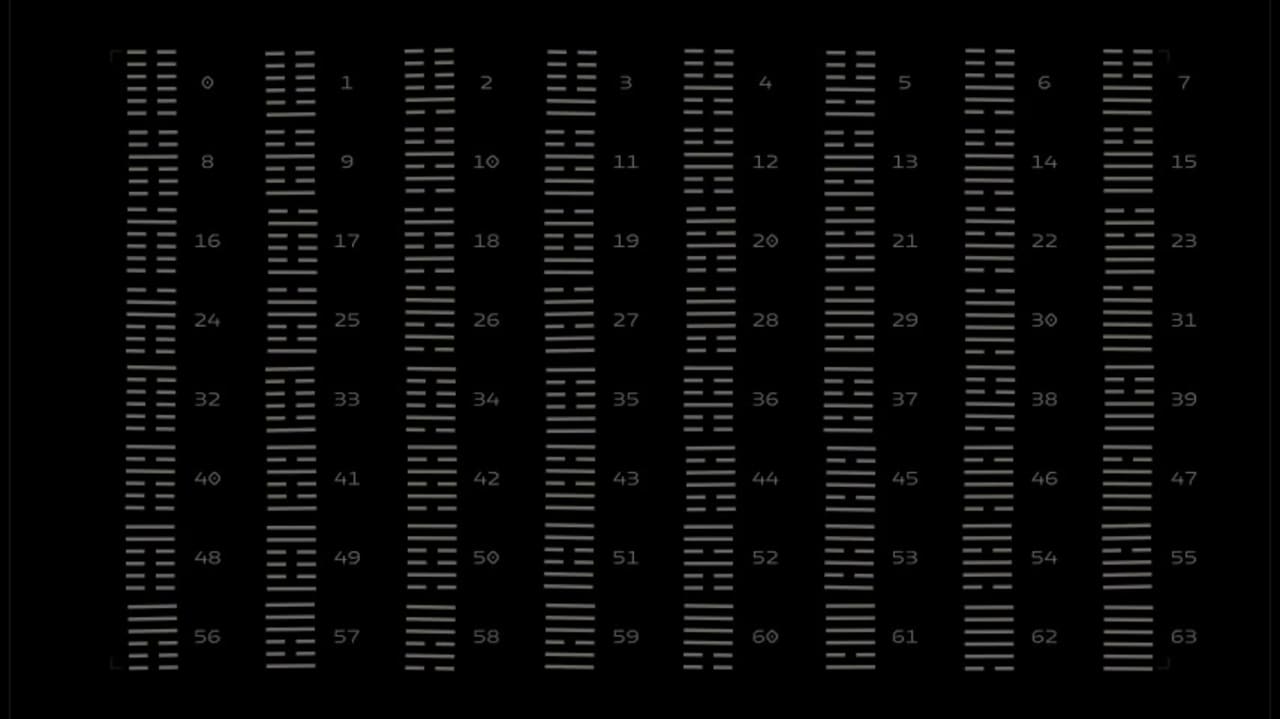
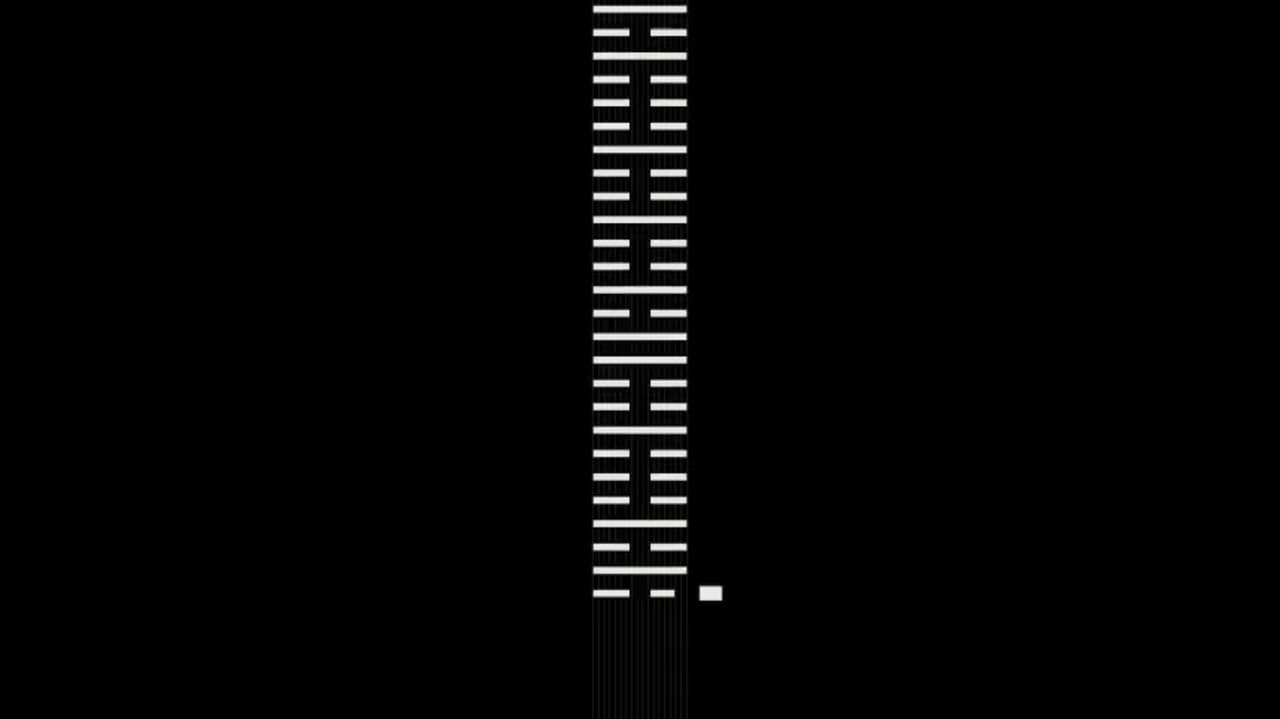
3Blue1Brown-style animated explainers of the I Ching — the 64 hexagrams, the binary structure Leibniz saw in them, the coin-toss probabilities — rendered as precise mathematical motion graphics in the vulpes monochrome palette with Manim.
You have to imagine you're the 17th-century mathematician, trying to find some order in the universe, some cosmic law that unifies everything — some source code of the universe written by God. Leibniz independently comes up with this idea of binary, and he sends it to a Jesuit missionary in China — and the missionary sends back this diagram of hexagrams. Binary is in his head for 20 years, and literally it's a week later that he sends the letter to a paper explaining binary. He sees the echoes of a thing that he had already come up with on his own from first principles, and seeing that independent confirmation of something he had already found and thought about means a lot to him. That's it. That's the connection.
The foundation for computers, for the code that we all write, for every technological innovation we've seen, owes its roots to a person who was deeply open to the ideas of the I Ching. We've kind of lost a big part of our lineage as computer programmers — these things are not taught to us alongside syntax and recursion and for loops. Binary comes from a religious place: it's trying to explain a unity in the universe. On and off, there and not there, existing and not existing, light and shadow. It's embedded in the way that the data of this recording is stored. These are important moments of synchronicity.
I tell the longer version in Binary And The Book of Changes — and I actually use the outputs of these motion graphics in that video.